Showing posts with label City. Show all posts

Thursday, January 6, 2011

Palmyra, Syria

An oasis in the Syrian desert, north-east of Damascus, Palmyra contains the monumental ruins of a great city that was one of the most important cultural centres of the ancient world. From the 1st to the 2nd century, the art and architecture of Palmyra, standing at the crossroads of several civilizations, married Graeco-Roman techniques with local traditions and Persian influences.

   
First mentioned in the archives of Mari in the 2nd millennium BC, Palmyra was an established caravan oasis when it came under Roman control in the mid-first century AD as part of the Roman province of Syria.  It grew steadily in importance as a city on the trade route linking Persia, India and China with the Roman Empire, marking the crossroads of several civilisation in the ancient world. A grand, colonnaded street of 1100 metres' length forms the monumental axis of the city, which together with secondary colonnaded cross streets links the major public monuments including the Temple of Ba'al, Diocletian's Camp, the Agora, Theatre, other temples and urban quarters. Architectural ornament including unique examples of funerary sculpture unites the forms of Greco-roman art with indigenous elements and Persian influences in a strongly original style. Outside the city's walls are remains of a Roman aqueduct and immense necropolises.

Discovery of the ruined city by traveller in the 17th and 18th centuries resulted in its subsequent influence on architectural styles.


Check more in this video

Saturday, December 11, 2010

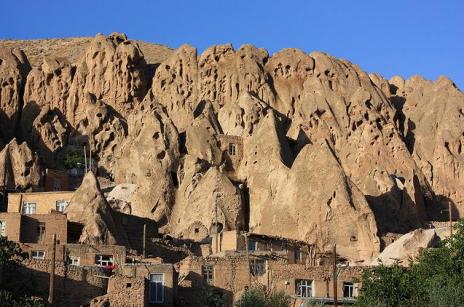
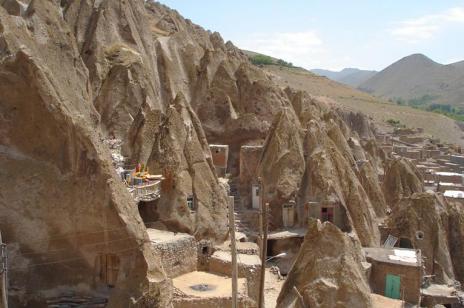
Amazing Rock-Carved Houses at Kandovan Village in Iran

Kandovan (also spelled Candovan) is a tourist village near Osku and Tabriz, Iran. The architectural history of Kandovan dates back to the 13th century. In this unique village, the homes are not just built on the mountain, they are carved into it. Built out of volcanic ash and debris spewed during an eruption of Mount Sahand, these rocky structures were compressed and shaped by natural forces into cone-shaped pillars containing pockets. They have been eroded by the elements over the years into their current shapes. This makes the complete village looks like a gigantic termite colony.


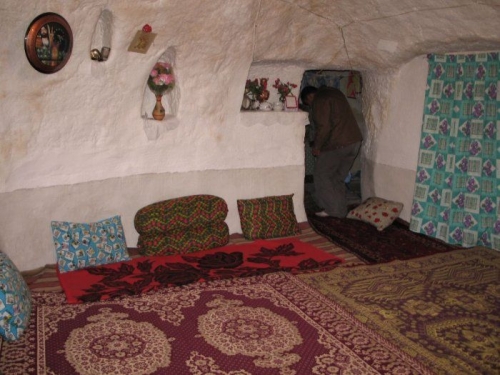
Some of these houses are at least 700 years old and still inhabited. Most of the houses are two to four storeys high. Legend is that Kandovan’s first inhabitants moved here centuries ago to escape from the invading Mongol army. Local residents say that the homes are not only strong but also unusually ‘energy efficient’: These homes require minimal supplemental heat during the long cold season and remain cool in the summer. 'Kando' means 'a bee’s hive’, and this is how Kandovan got its name.


Despite the village’s isolated nature, tourists from around the world can be found wandering in narrow streets, impressed by this old place. Those not necessarily wanting to stay in caves don’t have to worry about their stay - this rocky village has a five-star-rock hotel called Laleh Hotel. It is decorated with traditional Iranian furniture and is the third 'rocky' hotel in the world. This 40-room hotel is inspired by the traditional building methods of Kandovan. You will be amazed to have a bed, a TV room Kitchen and even Jacuzzi, all inside a rock.


Far away from pollution and noisy metropolitan cities, this stone village helps people relax. It makes us believe that cave living is by no means uncomfortable. A quiet place for those who are looking for peace and comfort.

Tuesday, December 7, 2010

The Amazing Rock City in Setinil, Spain

Setinil, Spain. Strange City Situated Between Rocks
Setenil de las Bodegas is about 18 km away from Ronda in the province of Cadiz, has wedged itself between the cliffs eroded by the Rio Trejo river. This village is built in a valley, and many of the houses especially the old one are built into the cliff, so the back of the house is solid rock. While the newer houses are against the hillside.

The name Setenil developed from the the Latin septem nihil – “seven times no” – which refers back to the period of the Christian reconquest, when Catholic kings tried to win back territory from the Moors, who had come from Africa and ruled the Iberian peninsula since 711. In Setenil’s case, only the seventh reconquest attempt was successful, in 1485, making the city one of the last bastions of the Moors until they were driven out of western Europe in 1492.